

The Three Dimensions Of Wing Chun
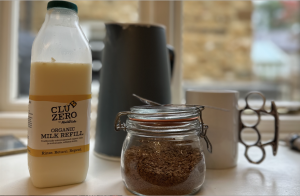
How do you like your coffee?
Male or female, young or old, new or seasoned, in Wing Chun everyone is liable to make mistakes, but are you aware of why this may be?
‘If you want to improve, stop making mistakes”
This is a phrase I have used a lot over my last 35 years of teaching, and it applies here once again, exactly what your mistake is, will be for you to decide once we have addressed the coffee issue.
Everything in Wing Chun seems to follow the rule of three, as in most things.
Golf – Driving, chipping and putting
Snooker – Potting. snookers or safety play
Tennis – Serving, returning serve, controlling play
Including the purpose behind centreline, we either – Guard it, attack down it, or recover it. You cannot defend ‘down’ centreline as two objects cannot occupy the same space at the same time, and if the strike was not coming down centre, then this wouldn’t be a block you’d be executing, it would be a counter ‘attack’.
Looking at Wing Chun as a whole, we can simplify this idea of three dimensions through the use of three drills.
Dan Chi Sau – Forwards and backwards – If the palm strike is not stopped, do not stop.
Lap Sau exercise – Up and down – Obviously focussing on the elbow.
Pak Sau drills – Side to side – While still knowing when to stop.
As clearly as these drills may present their benefits in use, do we use these ideas in the correct proportions?
Think of making yourself an instant coffee, I bet you wondered when I was going to mention this.
Well again, in it’s most simple terms, we could say that all we need are three simple components, coffee granules, hot water and milk (black coffee drinkers, swap the milk for sugar, we’re only playing with an idea here).
When making a cup of instant, most of us would use a conventional teaspoon of coffee, a touch of milk and topped with hot water, all in their preferred proportions.
However, if you were to use a snow-shovel to put the coffee in, I think we would all agree there is a good chance of this being too strong, equally so if we were to almost fill the cup with cold milk and only add a dash of hot water.
My point being that things work at their best when the proportions are balanced correctly.
Applying this thinking to your Wing Chun, let’s look at a Bong, Lap, Fak Sau, has this ever felt sluggish or heavy to you, perhaps a touch clumsy and lacking in flow?
Then I would imagine your measurements are off, much in the same way a person would not get muffins to rise or have cakes with a soggy bottoms (my wife is a baker, oh, and does not have a soggy bottom thank you!).
When executing a Bong, Lap, Fak Sau, you would need to throw the Bong out with enough force that it meets its contact with some intention, matched with this would be the need to have the elbow high enough and you using a turning stance to avoid the thing collapsing into your face!
Once the Bong has received the oncoming force (for a little fun, lets say these are the granules), it would then need to switch off so as to, pass the baton to the Lapping hand, which flows inward, and in-turn fires the Fak Sau outward (the hot water, ‘flows’ get it?), then at the point of impact, we need the explosive (splash of milk) energy.
Okay, maybe I’m going off a bit there, but you get the idea.
Being too forceful with a Bong, may cause the Lap to need more force and, the need for more force is likely to cause a great chance of telegraphing, both of which will see the Fak Sau having little chance of landing at all.
So sometimes, less is more, especially if you are searching for more flow in your techniques.
‘Never sacrifice technique, for speed and power’
Using a powerful block against a hook punch, at times, may well be justified, but the more you switch on, the more you will need to switch off (obviously), but what if, you do appreciate the need to use power, but you are not yet so skilled in using the off switch?
Then move!
‘If ever there is a problem with your hands, let your feet sort it out for you’
Or
‘If in doubt, GET OUT!’
So, when running through your drills or rolling in Chi Sau, try to give a little consideration to where the energy is being used and how much you are using.
Because, applying an incorrect amount of energy in one area, may not be quite so obvious at the time, but it could be creating a knock-on effect, causing problems further down the line and leaving you stumped.
A student could find themselves battling for years, over why their Fak Sau is lacking in explosive energy, never connecting the dots to see that the issue mat have actually began with their Bong.
Next week, biscuits, and when is it safe to dunk.
(Not really)
Thank you for reading.